DISPLACEMAKING? EXPLORING THE INVISIBLE INFRASTRUCTURE OF MELBOURNE’S PUBLIC HOUSING ESTATES: MPAVILION/NAOMI MILGROM FOUNDATION
SOcial Impact Advisory & Strategy • FACILITATION
The Challenge
Housing renewal is often discussed through the lens of new dwellings, design and delivery. But established public housing communities also contain relationships, trusted services, local knowledge and informal networks of care that can be difficult to see and even harder to replace.
Through Amplifier’s work in and around the North Melbourne and Flemington public housing estates, we saw growing concern about what could be disrupted through relocation and renewal, particularly for families, older residents and the organisations that support them.
The Task
Amplifier Collective was invited to host a public, ‘lived experience’ conversation at MPavilion exploring what housing renewal can mean beyond the buildings themselves.
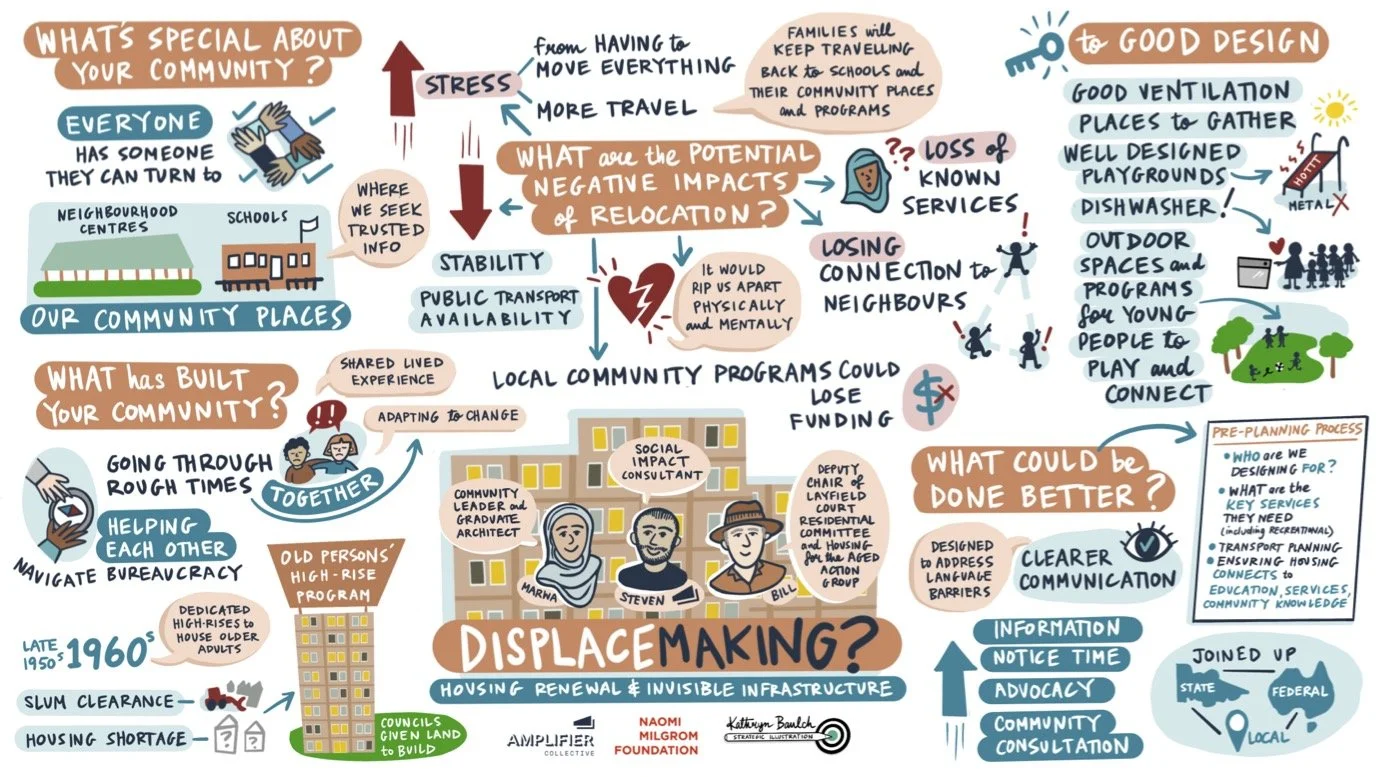
The session aimed to centre lived experience and ask three questions: what makes these communities worth protecting, what can be unintentionally lost through relocation and renewal, and what would better renewal look like?
Our Approach
The event brought together public housing residents and community leaders with direct experience of established inner-Melbourne housing communities.
The conversation explored:
informal care, belonging and the ‘invisible infrastructure’ that makes communities work
the impacts of relocation on schools, friendships, services and local support networks
the particular importance of continuity for young people and older residents
community knowledge as an input to planning and design
the difference between consultation and genuine influence
the need for better coordination between housing delivery, education, local government and community services.
The Result
The conversation highlighted that successful housing renewal cannot be measured by the quality or number of new dwellings alone.
Residents described communities built through neighbours checking on one another, schools and neighbourhood organisations acting as trusted connectors and people maintaining relationships and routines over many years. They also described how relocation can disrupt those networks, while reducing participation in the schools, programs and organisations residents may eventually return to.
The session also identified opportunities for renewal processes to make better use of community knowledge, engage residents early enough to influence outcomes and consider the wider impacts of housing decisions across education, services, transport and community life.
A central idea emerged from the discussion: before renewing housing, we need to understand what we are trying not to lose.
The event was delivered with support from MPavilion and the Naomi Milgrom Foundation.